If your customers come from a particular town, county or region, local SEO is probably the most valuable marketing you're not doing properly. It's how you show up when someone searches for what you do plus where they are, or simply searches "near me" on their phone. For a small business it's also one of the few areas where you can genuinely compete with much bigger names, because Google cares about how close and how relevant you are, not just how large.
This guide covers the parts of local SEO that make a difference, in the order we'd tackle them.
How Google decides who shows up locally
Google is unusually open about this. Its own guidance on local ranking says local results are based mainly on relevance, distance and prominence. Relevance is how well your listing matches what someone searched for. Distance is how far you are from the person searching, or from the place they named. Prominence is how well known your business is, and Google says that includes things like how many websites link to you and how many reviews you have.
You can't do much about distance. You can do a great deal about the other two, and that's where all the work below fits.
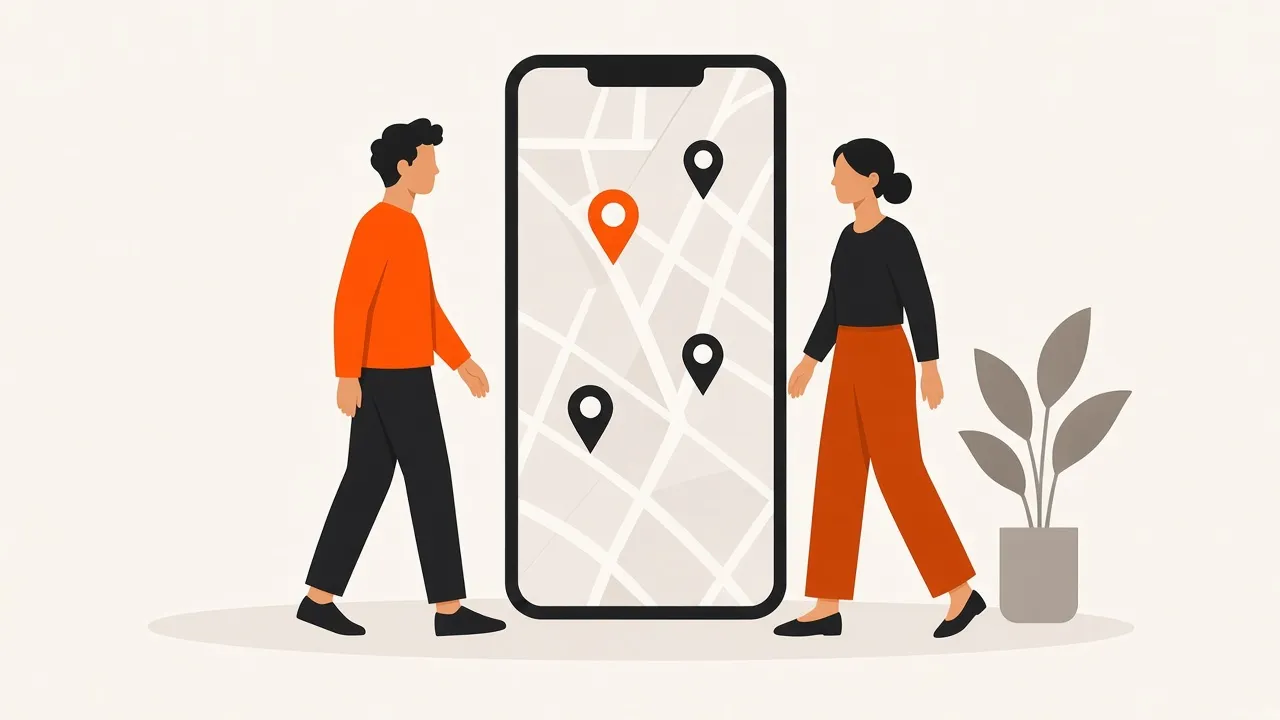
Get your Google Business Profile right first
Your Business Profile is the listing that appears in Google Maps and in the map pack at the top of local results. For many small businesses it gets more views than the website itself.
Fill in everything. Choose the most accurate primary category, because it carries real weight, then add any secondary categories that genuinely apply. Write a description that says plainly what you do and where. Add your services, opening hours, photos of your actual premises and work, and keep it all current. If your hours change for a bank holiday, update them.
We've written a full Google Business Profile setup guide, so we won't repeat it all here. The short version is that a complete, accurate, active profile beats a half-finished one every time.
Reviews matter more than most people think
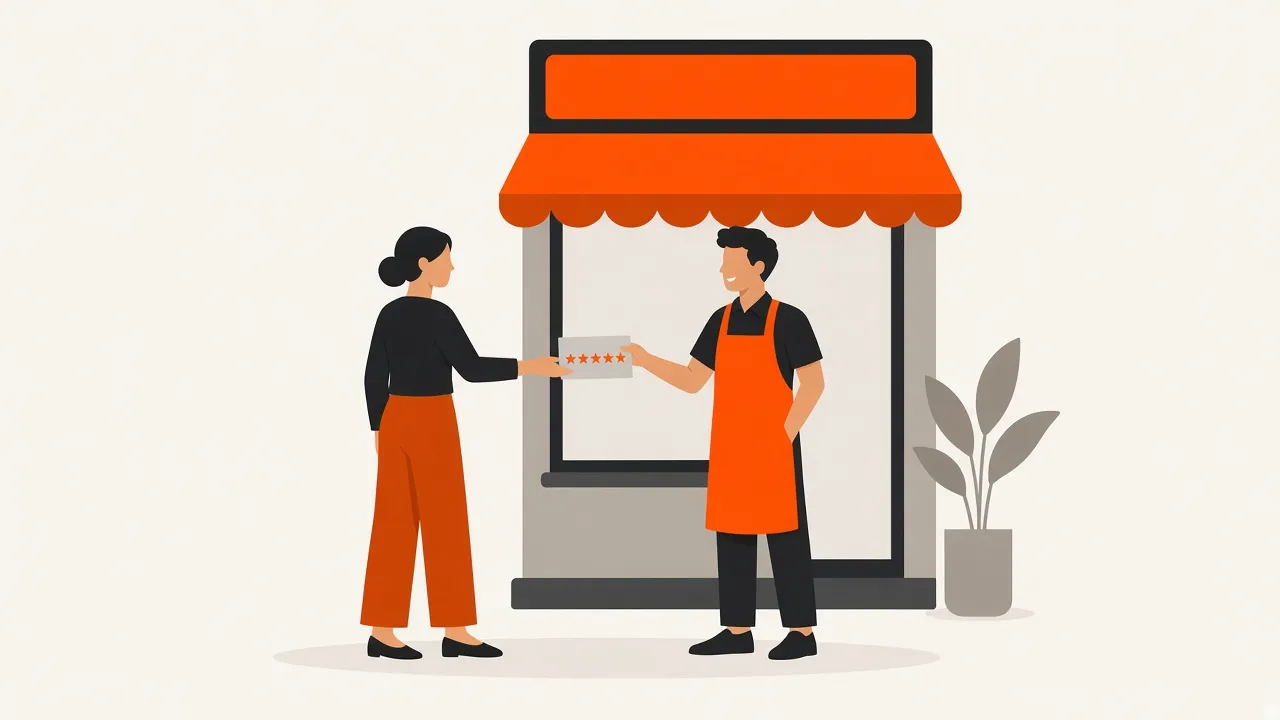
Reviews feed into prominence, and they're also what persuades a person to pick you over the business next to you in the results. The trick isn't a clever system. It's asking, consistently, at the moment a customer is happiest. That might be when a job is signed off or when they thank you on the phone.
Make it easy by sending a direct link to your review form. Reply to every review, good and bad. A calm, helpful reply to a poor review often does more for your reputation than another five stars, because future customers read how you handle problems. Don't buy reviews or offer incentives for them. It breaks Google's rules and it's rarely worth the risk.
Your website still does the heavy lifting
A good Business Profile points to a website, and the website has to back it up. Your name, address and phone number should match the profile exactly and appear on the site, usually in the footer and on a contact page.
Each core service should have its own page that explains what you do, who it's for and where you do it. If you serve several towns, a page for each can help, but only when there's something genuinely useful to say on it. A set of near-identical pages with the town name swapped out tends to do more harm than good. Write about the work you've done in that area, the questions people there ask you, and how they can get hold of you.
Basic technical health counts too. The site needs to load quickly on a phone, be easy to navigate and be readable by search engines. Our guide to on-page SEO covers headings, structure and schema markup, which helps Google understand your business details.
Local links and mentions
The links that help a local business most are usually local ones. Think about the organisations you already have a relationship with: suppliers, trade bodies, local business groups, charities you support, events you sponsor and the local paper. A mention or link from any of them tells Google you're a real, active part of the community.
Local press coverage is especially useful because it builds links and reputation at the same time. That's what our digital PR work is built around. Small businesses often have better local stories than they realise, such as a new opening, a milestone or a project with a community angle.
Keep your business details consistent wherever they appear online, including directories and social profiles. Inconsistent addresses or old phone numbers create doubt, both for Google and for customers.
Measure what matters
Rankings are worth watching, but they aren't the goal. What you want to know is whether more local people are calling, booking or enquiring. Your Business Profile shows calls, direction requests and website clicks. Google Analytics shows what people do once they reach your site, and our GA4 guide for small businesses explains how to set that up. Search Console shows which local searches you're appearing for.
Check these monthly rather than daily. Local SEO builds steadily, and week-to-week movements don't tell you much.
Where AI search fits in
People increasingly ask AI assistants for recommendations as well as typing into Google. The good news is that the same foundations help with both: accurate business details, real reviews, clear service pages and mentions on trusted sites. If you want to go deeper, we've covered it in our posts on generative engine optimisation and how AI is changing SEO.
Frequently asked questions
Is local SEO worth it for a small business?
If your customers are mostly local, yes. It puts you in front of people at the point they're looking for what you do nearby, which is about as warm as a lead gets.
How long does local SEO take?
It varies with your area and how competitive your trade is. Fixing your Business Profile can make a difference quickly. Reviews, content and links build up over months.
Do I need a website for local SEO?
You can appear in the map pack with only a Business Profile, but a good website makes the profile stronger and gives customers somewhere to go next. In practice, the businesses that do best locally have both.
Can I do local SEO myself?
Much of it, yes, especially the Business Profile and reviews. Where an agency helps is with the technical side, content and earning local coverage. You can see how we work on our SEO services page, or get in touch if you'd like us to take a look.